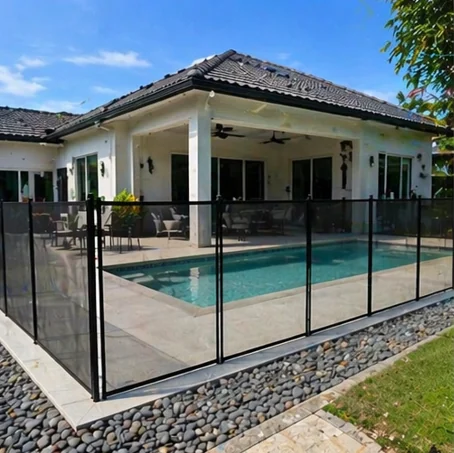
Mesh Pool Fencing
A dedicated pool boundary with removable sections. Discuss core drilling, deck sleeves, and anchoring suited to your installation surface.
Request an estimate ↗ Request an estimate ↗
BLUEGUARD FENCING LLC · BROWARD COUNTY
Compare removable mesh and aluminum fencing for your pool area. Tell us about your deck surface, existing fence and layout so we can discuss the next steps.
POOL SAFETY FENCING
Choose between removable mesh and aluminum pool fencing. We’ll discuss your pool deck, layout, access points, and installation needs.
A dedicated pool boundary with removable sections. Discuss core drilling, deck sleeves, and anchoring suited to your installation surface.
Request an estimate ↗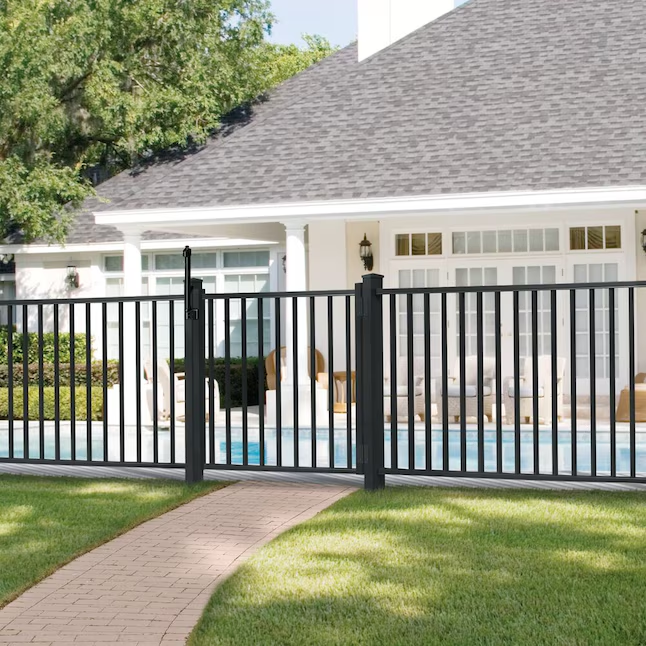
A permanent, open-view boundary for your pool area. Discuss the layout, finish, posts, and installation details for your property.
Request an estimate ↗Pool fencing is one part of pool safety. Active adult supervision remains essential.
Need pool fence repairs? Explore repair services ↗FLORIDA POOL SAFETY · A HOMEOWNER'S GUIDE
A pool fence is part of a larger safety plan. Florida's Residential Swimming Pool Safety Act addresses new residential pools and recognizes several safety-feature options. The building code, your city's requirements, and the selected system determine what your project needs.
Section 515.29 sets a four-foot minimum measured on the outside of a residential pool barrier. It also addresses access underneath, through, or over it, separation from the water, and climbable objects nearby. A yard fence counts only when its location and design meet the pool-barrier requirements.
Picket openings, bottom clearance, horizontal rails, and mesh openings need individual attention. CPSC guidance shows why a four-inch opening rule does not cover every fence configuration: some rail arrangements need tighter spacing. Changes in grade, deck edges, and nearby furniture also deserve a careful layout review.
Florida law calls for pool-access gates to swing away from the water, close themselves, and have a self-latching locking device with a release a young child cannot reach. Correct release placement and opening protection matter together. Never prop access open; follow the installed system's checking and maintenance instructions.
Removable mesh can provide a dedicated pool boundary; aluminum offers a permanent, open-view enclosure. Neither material name establishes compliance. Check the complete system, anchoring, access points, and installation details. With removable sections, follow the manufacturer's instructions and maintain protection whenever the barrier is removed or damaged.
Section 515.27 lists a qualifying enclosure, approved safety cover, specified exit alarms, specified self-closing and latching house doors, or a qualifying pool alarm. Each option has conditions. These alternatives do not automatically replace other building-code, zoning, or permit requirements.
A working barrier cannot replace close adult supervision. Keep children away from water without an attentive adult, keep climbable objects away from the fence, and address damaged mesh or malfunctioning hardware promptly. Share the safety plan with family members and caregivers.
Have your address, survey, pool and deck photos, approximate lengths, and preferred fence height ready. Confirm the permit and inspection process with the building department for your address. Existing pools and alterations need a project-specific review; this overview does not determine whether an older pool is compliant.
Educational overview checked October 26, 2026. Use current law, the applicable building code, local requirements, and manufacturer instructions for your project. No fence or alarm guarantees that a drowning cannot occur.
EXPLORE OUR SERVICES
WHY THIS WORK MATTERS
Read Chris’s family story and why protection around water matters to him.
Why BlueGuard ↗POOL SAFETY RESOURCES
The CDC identifies drowning as the leading cause of death among U.S. children ages 1–4. Learning about the risks is an important step toward planning layers of protection around water. Source: CDC ↗
WATCH · AMERICAN ACADEMY OF PEDIATRICS
Pediatric emergency physician Dr. Sarah Denny shares practical pool-safety advice for parents in this HealthyChildren.org video.
Watch the video at HealthyChildren.org ↗READ · CENTERS FOR DISEASE CONTROL AND PREVENTION
Explore the CDC’s guidance on close supervision, swimming skills, pool barriers and CPR. These measures work together; a fence does not replace supervision.
Read the CDC safety guide ↗TAKE THE INFORMATION HOME
Free resources from Florida and the U.S. Consumer Product Safety Commission. Save a copy for your household and caregivers.
CPSC / POOL SAFELY
The August 2012 edition adopted by Florida: guidance on pool barriers and reducing unintended access.
Download PDF (3.5 MB)Official source ↗FLORIDA LAW
Download the 2019 Chapter 515 edition incorporated by Florida rule. The current 2026 text is also linked below.
Download PDF (0.1 MB)Read current Florida law ↗FLORIDA DEPARTMENT OF HEALTH
A family handout covering supervision, water skills and safety around water.
Download PDF (4.9 MB)Official source ↗FLORIDA DEPARTMENT OF HEALTH
Printable English and Spanish tags to help identify the adult responsible for watching children around water.
Download PDF (0.3 MB)Official source ↗These educational handouts support layers of protection around water. Follow the instructions for your installed fence and equipment. Active adult supervision remains essential. Documents checked October 25, 2026.
Independent educational resources, checked October 25, 2026. Links open in a new tab. These organizations do not endorse BlueGuard Fencing LLC.